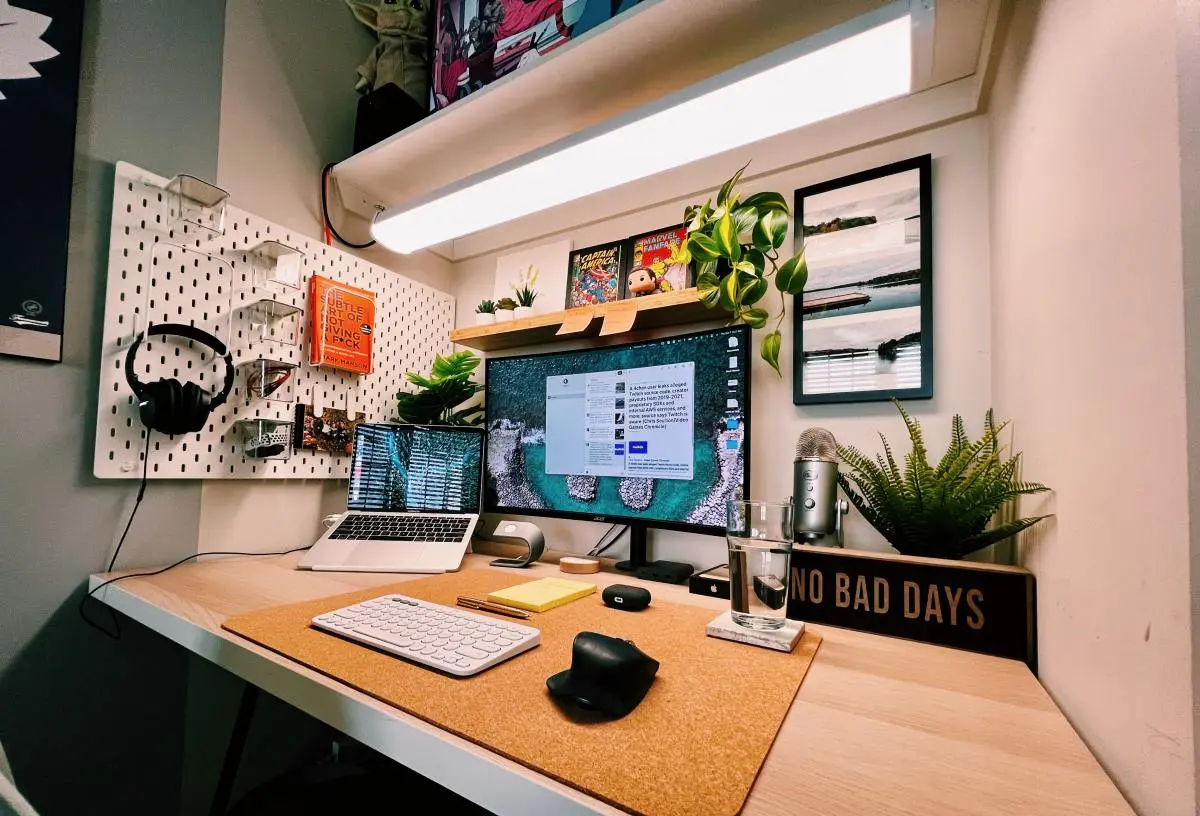
Ingredients
Equipment
Method
Assessment and Ergonomics
- Begin by clearing and cleaning your current desk to identify what works and what doesn't in your workspace.
- Invest in a supportive ergonomic chair and adjust it so your feet are flat, knees at 90 degrees, and back supported, ensuring your desk height also allows your elbows to rest at a 90-degree angle.
Organization and Personalization
- Position a good quality task lamp to illuminate your workspace without glare, ideally with adjustable brightness or warmth.
- Implement smart storage by grouping similar items, utilizing pen holders, file organizers, small drawers, and vertical shelves to keep frequently used items accessible.
- Add meaningful items like a plant, photo, quote, or water bottle to personalize your space without creating clutter.
- Use cable ties, clips, or a cable management box to organize and hide wires and chargers.
Maintenance and Refinement
- Make a habit of tidying your desk for 5 minutes after each study session, putting items back immediately and wiping the surface.
- Weekly, purge unnecessary items like old notes or wrappers, and seasonally, declutter files and perform a thorough clean.
- Reduce physical paper by going digital where possible and adopt a "one in, one out" policy for new stationery.
- For small desks, utilize wall space with shelves, pin boards, or a magnetic whiteboard.
- Ensure every decorative item serves a purpose by inspiring, organizing, or bringing joy.
- Experiment with themes, soundscapes, scent memory, flexible seating, and visual cues to enhance your workspace.
Notes
This "recipe" focuses on creating an optimal physical and psychological environment for productivity, rather than a food item. The "ingredients" are components of a desk setup, and the "instructions" are steps to arrange and maintain it. Nutritional values are not applicable here.