Ingredients
Equipment
Method
Cooking the Rice
- Rinse rice thoroughly, combine with water in a saucepan, bring to a boil, then simmer covered for 15-18 minutes until tender.
- Remove from heat and let stand, covered, for 5 minutes.
Prepare the Beef
- Combine beef with soy sauce, mirin, sesame oil, minced garlic, and black pepper; marinate for at least 15 minutes.
- Cook beef in a skillet over medium-high heat until browned and cooked through, then set aside.
Sauté the Vegetables
- Sauté each vegetable separately in a skillet with a tiny bit of oil.
- Sauté bean sprouts for 2-3 minutes until tender-crisp and season with salt and pepper.
- Quickly sauté spinach for 1-2 minutes and season with soy sauce and sesame oil.
- Sauté carrots for 3-4 minutes until tender-crisp and season with salt and pepper.
- Sauté zucchini for 3-5 minutes until tender and season with salt and pepper.
- Sauté shiitake mushrooms until softened and lightly browned, seasoning with soy sauce and sesame oil.
- Transfer each cooked vegetable to a separate plate.
Make the Gochujang Sauce
- In a small bowl, whisk together gochujang, sesame oil, sugar or honey, rice vinegar, minced garlic, and sesame seeds.
Fry the Eggs
- Fry 4 eggs sunny-side up in a non-stick skillet, ensuring the yolks remain runny.
Assemble and Serve
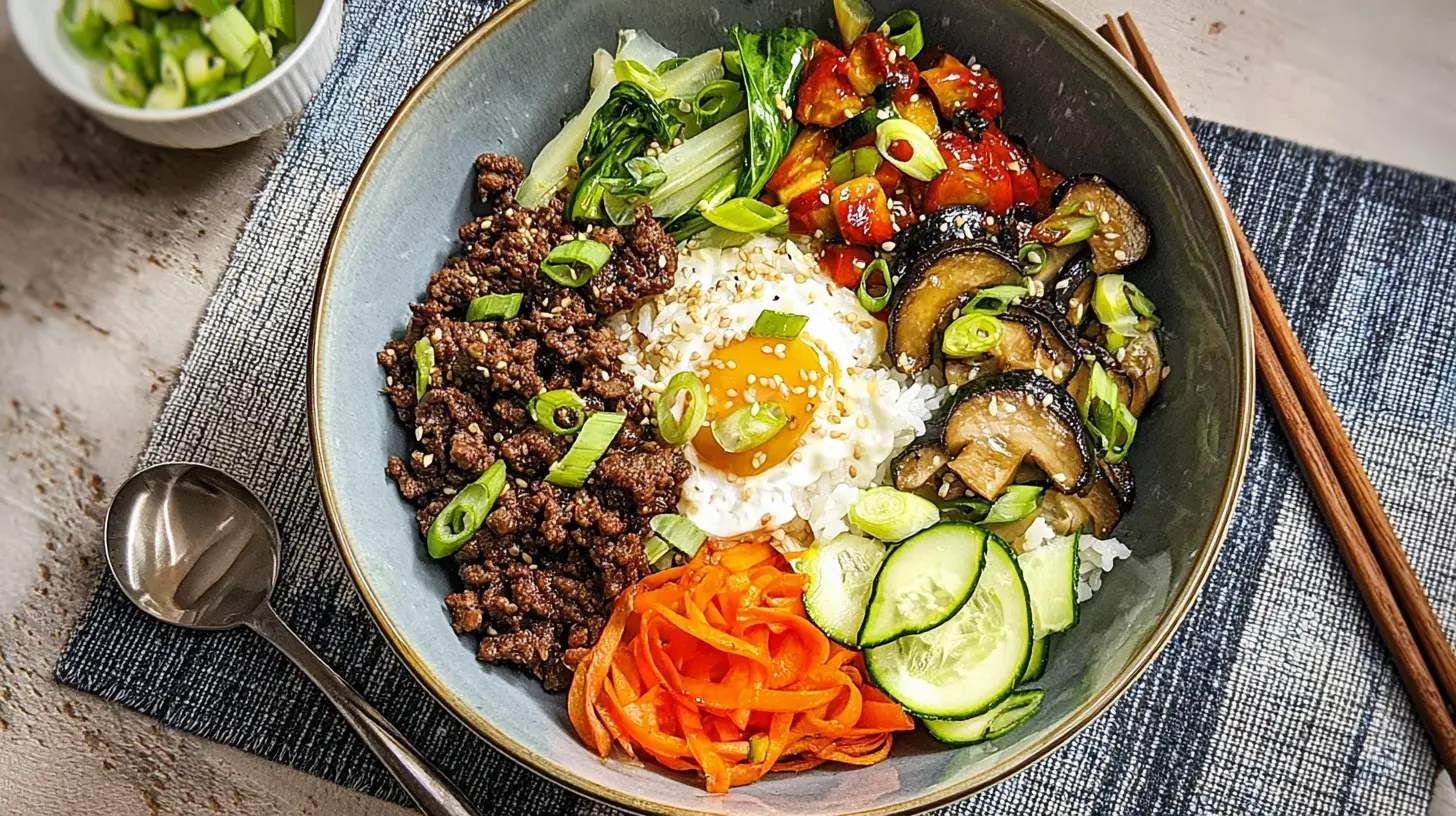
- Divide cooked rice among four bowls, artfully arrange beef, vegetables, and an egg on top, then drizzle with gochujang sauce.
- Garnish with toasted sesame seeds and serve immediately, instructing diners to mix all ingredients before eating.
Notes
For an extra kick, you can add a bit more gochujang to your custom sauce or offer it on the side. Adjust seasoning to your preference, especially the soy sauce and salt for the vegetables. Freshness of ingredients is key for the best flavor in Bibimbap.